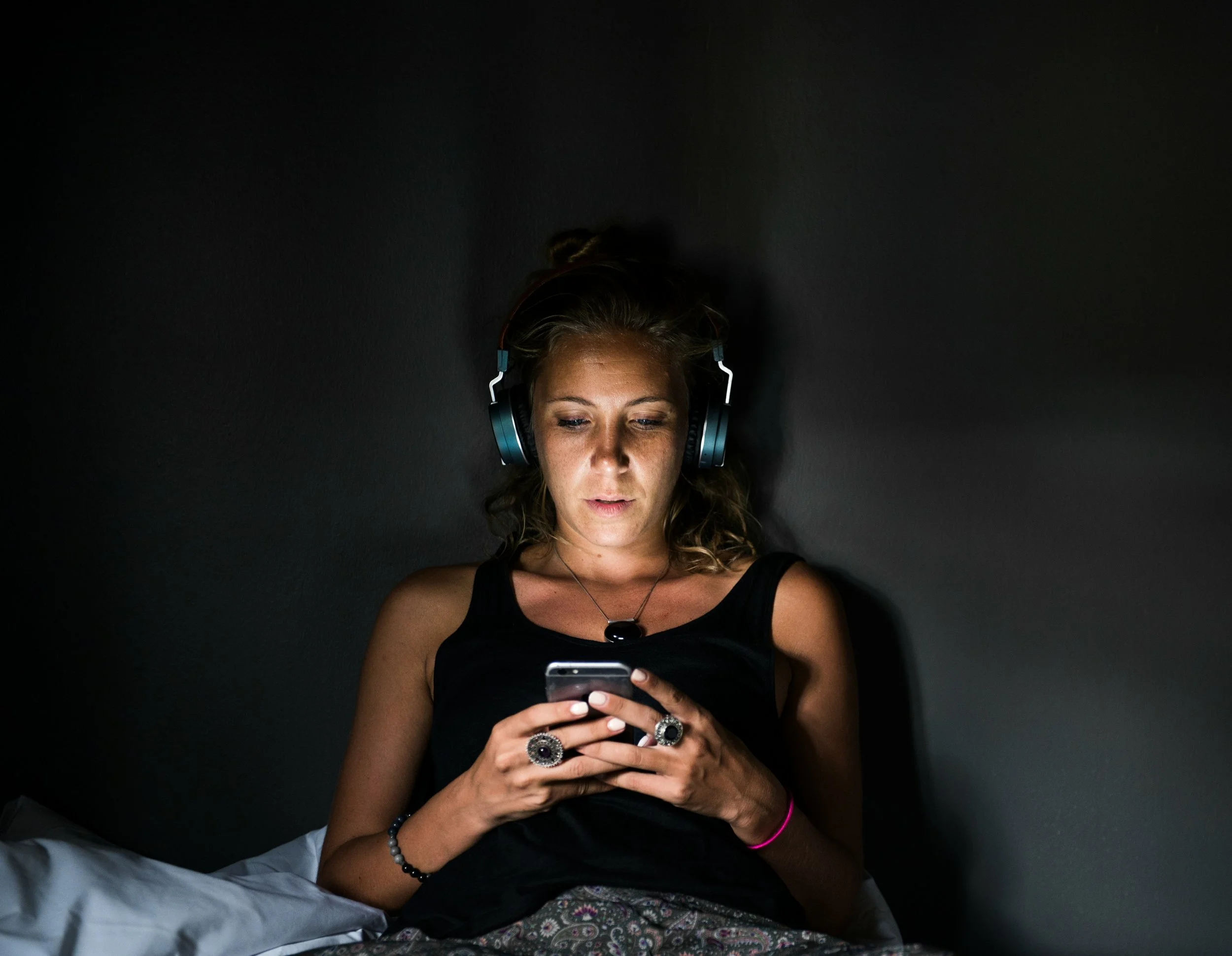
It’s 11:30 PM. Your eyes are burning. You have been yawning since dinner. You know you have a 7:00 AM alarm waiting to ruin your life.
And yet, you are still on the couch. You are watching another episode. You are scrolling TikTok. You are reorganizing your Amazon cart.
You tell yourself, "I just need to wind down." But deep down, you know that "winding down" shouldn't take three hours.
If you are a high-functioning professional, a burnt-out parent, or someone with an ADHD brain that won’t shut off, you aren’t just "bad at sleeping." You are likely engaging in something psychologists call Revenge Bedtime Procrastination.
And honestly? It makes perfect sense why you’re doing it. But we need to talk about why it’s wrecking you.
What is Revenge Bedtime Procrastination?
This isn’t just standard insomnia. According to the Sleep Foundation, this behavior has to meet three specific criteria to be clinically classified as "revenge" procrastination:
Less Sleep Overall: Your total sleep time is actually shrinking because of the delay.
No Good Reason: You aren't staying up for a crying baby, a work deadline, or an emergency. You are staying up for no external reason.
The Awareness Factor: You know full well that you are going to feel terrible tomorrow, but you make the choice to stay awake anyway.
The concept actually comes from the Chinese expression bàofùxìng áoyè. It originated as a response to the "996" work culture (9 a.m. to 9 p.m., six days a week), where workers felt their entire existence belonged to their employer.
Does that sound familiar?

“You know full well that you are going to feel terrible tomorrow, but you make the choice to stay awake anyway.”
The "Rebellion" Against Your Own Life
Here is the validation you’ve been looking for: You aren't staying up late because you are lazy. You are staying up late because you are starving for autonomy.
Psychologically, this is about regaining agency. Odessa S. Hamilton Ph.D., MBPsS, FRSPH, writing for Psychology Today, explains that when our days are dominated by obligations like meetings, emails, or caretaking, we feel a subconscious drive to "reclaim control" in the only hours we have left: the middle of the night.
It is, quite literally, a "rebellion against the burdens" of your daily life.
For those with ADHD or high-functioning anxiety, the pull is even stronger:
The Dopamine Hunt: Your brain’s reward center is looking for a payout. Late-night scrolling or gaming provides the immediate gratification that your brain craves.
The Quiet Chaos: The ADDitude editors note that the ADHD brain often slips into rumination mode once the sun goes down. You might use screens or activities to drown out the noise, seeking a "quick dopamine fix" despite the exhaustion.
The "Self-Care" Trap
In the moment, this behavior feels like self-care. You tell yourself you are just claiming a "little win" after a day of serving everyone else.
And here is the tricky part: The logic isn't flawed. You do deserve downtime. But the timing is dangerous because it pushes you past healthy relaxation and into sleep deprivation.
Experts call this the "Intention-Behavior Gap". You intend to sleep. You want to sleep. But by 10:00 PM, your self-regulation reserves are completely empty. You physically do not have the willpower left to close the laptop or smartphone.
The Cost of "Revenge"
While that freedom feels good at 12:30 AM, the interest rates are high.
The Zombie Effect: The Cleveland Clinic warns that this cycle leaves you "zombie-walking" through life: moody, unfocused, and chemically dependent on caffeine just to function.
Tired but Wired: It creates a paradox where stress keeps your brain buzzing even when your body is done. You might stay up just to avoid the anxiety of thinking about tomorrow’s to-do list.
Physical Health: It’s not just about being sleepy; chronic sleep deprivation can actually weaken your immune system, making you more vulnerable to getting sick.
“And here is the tricky part: The logic isn't flawed. You do deserve downtime. But the timing is dangerous because it pushes you past healthy relaxation and into sleep deprivation.”
How to Stop the Cycle (Without Shame)
If you want to stop the revenge cycle, you don't need "better sleep hygiene." You need better boundaries.
Redesign Your Day If you are revenge procrastinating, it is a sign your daytime routine is suffocating you. The Cleveland Clinic suggests "redesigning your day" to ensure you get pockets of leisure while the sun is still up, so you don't feel desperate for it at midnight.
Schedule "Little Wins" Early: You stay up late to squeeze in the "little wins" you missed during the day. Flip the script. Schedule 15 minutes of non-negotiable "me-time" at 2:00 PM to satisfy that itch before you are exhausted.
Reclaim Control Before 5 PM: Since this behavior is a "rebellion against the burdens" of your schedule, try rebelling earlier. Take a walk without your phone or read a chapter of a book at lunch. By taking back ownership of your time during the day, you reduce the subconscious need to "reclaim control" at night.

“You stay up late to squeeze in the "little wins" you missed during the day. Flip the script. Schedule 15 minutes of non-negotiable "me-time" at 2:00 PM to satisfy that itch before you are exhausted.”
2. Hack Your Environment Since your willpower is offline at night, stop relying on it. ADDitude suggests using external barriers:
The Phone Lockout: Use "downtime" settings on your phone. If you just ignore them, have a partner or friend set the passcode so you cannot override it.
Intermittent Fasting: Try closing the kitchen by 8 p.m.. If you aren't snacking or pouring a glass of wine, you are less likely to linger on the couch.
3. Change the Signal Set an alarm specifically to signal the start of your wind-down ritual, rather than just an alarm for when you need to be asleep.
The New Mantra & The Reality of Change
We need to reframe sleep. It’s not a chore to be avoided; it’s the fuel for the version of you that wants to succeed.
Try using this mantra from the editors at ADDitude: "My best tomorrow starts at bedtime tonight".
However, we want to be very clear: This is a practice, not a light switch.
You are rewriting neural pathways and undoing years of habit loops. There will be nights where you slip back into the scroll. There will be nights where the "rebellion" wins. That doesn't mean you failed; it means you are human. Give yourself permission for this adjustment to take time.
And remember, if you are navigating a clinical diagnosis like ADHD or high-functioning anxiety, "willpower" is often not enough. When your brain chemistry is actively seeking that dopamine fix, trying to white-knuckle your way to a better routine can feel impossible.
This is where working with a therapist or executive function coach becomes a game-changer. You don't have to overhaul your neurology alone. Sometimes, the bravest thing you can do is bring in a partner to help you build the scaffolding you need to finally get some rest.
And if the late nights feel less like a choice and more like a pull you can't resist, especially when scrolling, drinking or other habits are part of it, our therapists who specialize in addiction and recovery can help you look at what's driving that pull, without labels or judgment.
References:
Hamilton, O. S. (2025, April 7). 8 reasons why people resist going to bed. Psychology Today. https://www.psychologytoday.com/us/blog/the-bridge/202503/sleep-procrastination-why-we-rebel-against-sleep
Cleveland Clinic. (2025, June 19). Choosing me-time over sleep? Here’s what to do about revenge bedtime procrastination. https://health.clevelandclinic.org/revenge-bedtime-procrastination
ADDitude Editors. (2025, May 12). Battling revenge bedtime procrastination: How I stopped losing sleep. ADDitude. https://www.additudemag.com/revenge-bedtime-procrastination-good-nights-sleep/
Suni, E. (2025, July 15). Revenge bedtime procrastination. Sleep Foundation. https://www.sleepfoundation.org/sleep-hygiene/revenge-bedtime-procrastination
Ready to Break the Cycle?
If you found yourself nodding along to every paragraph, it might be time to look deeper than just your sleep routine.
At Resilience Therapy, we know that revenge bedtime procrastination isn’t just a bad habit. It is often a symptom of burnout, perfectionism, or an ADHD brain that is desperate for support. You don't have to navigate this alone, and you certainly don't have to shame yourself into changing.
We are here to help you find the root cause and build a life you don't feel the need to escape from at night.
Keep Reading
Not ready to reach out just yet? That is okay. Here are a few more resources to help you understand your brain a little better:
If you can’t stop scrolling: The Dopamine Dilemma: Social Media's Impact on Mental Health
If you feel like you’re running on empty: The Energy Economy: Understanding Mental Health Through Your Energy Budget
If you feel like you have to do it all perfectly: The Perfectionism Paradox: When High Achievement Masks ADHD