When Stress Activates Vulnerability: Epigenetics, Sensitivity Genes, and Why Orchids Need Different Gardens
After a decade working across continents treating addiction and mental health disorders, researching prevention science, working with children and families and teaching, I want to share what I've learned about how to create an 'enriching environment' at any age.
Today, I'm introducing you to a concept that changed how I understand everything: epigenetics.
Moving Beyond "Either/Or"
When people believe mental health disorders are solely genetic and predetermined, research shows there are measurably worse outcomes. When clinicians hold these beliefs, their empathy drops and optimism about interventions declines (Lebowitz & Ahn, 2014).
When parents believe their child's behaviors are genetically predetermined, it can affect child development (IpsosMori, 2021, Finnegan, 2010). They report more parenting difficulties and can show more hostile parenting behaviors (Stover et al., 2015).
If we think our impact doesn't matter, we become less intentional about how we show up.
But here's what the science of epigenetics - currently at the forefront of addiction and trauma research - tells us: We need a ‘both/and’ approach, not ‘either/or’.
We can't control what genes we inherit, but there's a difference between being powerless and having influence. We can control our presence, communication, and behaviors, which can either support or exacerbate what's already there.
What Is Epigenetics?
‘Epi’ means ‘above’. Epigenetics literally means ‘above the genes’. Your DNA sequence doesn't change throughout your life. However which genes get expressed: which ones are active or silent, change in relation to your environment.
Environmental factors add or remove chemical tags (like methyl groups: think Post-it notes) to your DNA. When a gene gets tagged with methylation, it's typically silenced. When those tags are removed, the gene can become active again.
This is where trauma literally gets under your skin: It's not genes or environment. It's genes and environment.
“This is where trauma literally gets under your skin: It's not genes or environment. It's genes and environment.”
The Stress Gene at the Forefront of Emerging Research
The NR3C1, the Glucocorticoid Receptor Gene is the stress gene, related to the HPA axis: essentially, your stress response system. It helps regulate cortisol and is critical for the connection between your prefrontal cortex (your brakes, your ability to regulate) and your amygdala (your gas pedal for fear). Currently it is at the forefront of scientific research for addiction (Raffetti et al, 2021).
Research shows that chronic childhood stress causes hypermethylation of NR3C1. Those chemical ‘post-it notes’ get stuck all over the gene, changing how it functions, resulting in: a weakened prefrontal cortex that cannot regulate emotions, a hyperactive amygdala that's overreactive to perceived threats, and a nervous system with no "calm":the GABA system that's supposed to help you calm down becomes dysfunctional.
This is the exact neurobiological signature we see in affect dysregulation, hypervigilance, the inability to calm down. It's the internal state that makes substances feel like a solution. But it's also the signature of anxiety disorders, depression and PTSD.
Same underlying pattern. Different manifestations.
And here's the tragic pattern I see in my work: In families where these sensitivity genes are present, children are often exposed to the very environmental conditions: chaos, invalidation, shame, trauma: that would activate those genes. The kids who need the most supportive environment often grow up in the kind most exacerbating that vulnerability.
The exciting news? If the environment can activate genes, it can also regulate them.
“The exciting news? If the environment can activate genes, it can also regulate them.”
The Research That Left Me Astounded – and I Think It Will for You Too
Researchers at Duke University tracked 891 high-risk children from kindergarten through age 25 (Albert et al., 2015). They looked at kids with a specific variant of the NR3C1 gene.
Without intervention: 75% developed serious psychopathology by age 25. Substance abuse. Antisocial personality disorder. Aggression. Depression. Anxiety. These kids had the worst outcomes of anyone in the study.
With intervention: The same kids received a 10-year program focused on family support, social skills training, and emotion regulation. Only 18% developed psychopathology.
A 57-percentage-point difference.
And here's what made me realize we've been thinking about this all wrong: these kids didn't just ‘do okay’. They had among the best outcomes in the study. The same gene that made them most vulnerable also made them most responsive to healing.
This has been replicated across multiple studies. Research on the DRD4 7-repeat variant shows children with this gene have the worst literacy outcomes in harsh environments but the best outcomes with positive teaching, responding more than twice as well as children without the variant.
Research into the 5-HTTLPR sensitivity gene (serotonin) shows that the gene alone doesn't predict problems: there was a marked difference between those who had the gene and experienced Adverse Childhood Experiences than those who did not (ACEs: various types of abuse (physical, emotional, sexual), divorce, parental substance abuse, mental illness, or incarceration of a household member. Other examples include neglect, witnessing violence, and facing discrimination, (Goodyer et al., 2012).
This means they aren't problematic unless combined with ACES, therefore they aren’t ‘risk genes’, they're sensitivity genes - plasticity genes. They're genes that make you more receptive to input from your environment: both positive and negative.
Orchids and Dandelions
Researchers W. Thomas Boyce and Bruce Ellis coined a metaphor I love: Orchids and Dandelions (Boyce & Ellis, 2005).
Dandelion children are relatively robust. They thrive in most environments. They're less affected by adversity, but also less responsive to intervention. They grow almost anywhere.
Orchid children are highly sensitive to their environment. In harsh conditions: neglect, chaos, and trauma (including emotional abuse, chronic criticism, interpersonal shame, microaggressions, and cultural/stigma-related stressors), they wither. They have the worst outcomes. But in nurturing conditions: safety, attunement, support, and lower rates of toxic shame or emotional trauma, they don't just survive. They bloom spectacularly.
While researchers estimate about 15-20% of people have high sensitivity, the reality is more nuanced: we all fall on a spectrum of receptivity. Some people are highly receptive (like orchids), some are less so (like dandelions), and many fall somewhere in between. This isn't about being "special" or "broken", it's about understanding your particular nervous system's relationship with your environment.
If you struggled intensely as a child, if addiction or mental health challenges hit you harder than it seemed to hit others, if anxiety consumed you or depression felt bottomless or substances provided relief you'd never felt before, you might fall more on the orchid end of the spectrum.
Being an orchid isn't a defect. It's a different operating system that requires support plus gentle start-ups of resilience building (not corrosive loading of toxic stress).
“Being an orchid isn't a defect. It's a different operating system that requires support plus gentle start-ups of resilience building (not corrosive loading of toxic stress).”
Reframing "Sensitive" to "Receptive to Input"
The word "sensitive" has been weaponized. "Stop being so sensitive." "You're too sensitive." The subtext: something is wrong with you.
But research shows these individuals aren't "sensitive" in a negative way. They're more receptive to what you give them.
"Sensitive" implies fragility, weakness
"Receptive" implies capacity, openness, responsiveness
A receptive child absorbs more from their environment: both positive and negative. High-resolution.
Here's the tragic pattern: If sensitivity genes are more prevalent in families with intergenerational mental health challenges (and evidence suggests they are), the children who are MOST receptive to input are growing up in environments MOST likely to be shame-based, chaotic, or emotionally invalidating.
In a shame-based family, any child would be impacted. But with high receptivity, what an outsider might brush off as "not that bad" was devastating. Because they're more receptive, these messages go deeper. The shame compounds instantly as trauma. The nervous system learns hypervigilance as survival.
The manifestation varies: substances, panic, food restriction, compulsions, dissociation. The root is the same: a highly receptive nervous system trying to survive an invalidating environment.
And the same receptivity that made them vulnerable also makes them more responsive to healing.

“The word ‘sensitive’ has been weaponized. "Stop being so sensitive." "You're too sensitive." The subtext: something is wrong with you.
But research shows these individuals aren't "sensitive" in a negative way. They're more receptive to what you give them.”
A Word of Caution: This Isn't About Labels or Excuses
Understanding where you fall on the spectrum of sensitivity isn't about acquiring a new identity or excuse. It's a framework for understanding patterns: not a diagnosis, limitation, or permission to wait for perfect conditions.
If you recognize yourself as more orchid-like, this doesn't mean your struggles are more valid than someone else's or that you're absolved of responsibility for your healing.
What it does mean:
You might benefit from being more intentional about your environment
Small changes in your surroundings might have bigger effects for you
You have capacity for profound transformation when you find the right support
You need to work both sides: change what you can externally while building internal resilience
The goal isn't to identify as an orchid and stop there. The goal is to understand your needs so you can create conditions for growth.
For Parents: You Haven't Failed
If you're parenting a receptive child and feel like you're working three times as hard, you probably are. Your child needs more co-regulation, more consistency, more explicit teaching of emotional skills. This isn't a deficit in your parenting. It's a different operating system.
You're not trying to make your orchid into a dandelion. You're creating an environment where their orchid nature can become a strength rather than a vulnerability. Children and grandchildren of people with alcohol use disorder are far more likely to present with neurodivergent diagnoses or mood disorders than in other families (this is not necessarily a direct cause and effect but multiple factors: inherited trait that contributed to the other family member’s substance use + environmental factors like stress, prenatal alcohol use) so if you want to see it through that lens as well, there are elements which are inherent and we must acknowledge that they are likely to be different in certain ways before they are born. However, your effort isn't wasted. It's epigenetically significant. ACEs accumulate, but so do supportive interactions, moments of attunement, repairs after ruptures.
What the research shows us is that changing the environment and breaking the cycle matters even more profoundly if they have inherited any of the sensitivity genes. We also know that healing in your generation or above can also turn the genetic coding off - and your kids' genes can change too.
Kids don't need perfect parents. They want validating ones. Your willingness to work on yourself: your trauma responses, your communication, your capacity to regulate when your child is dysregulated profoundly affects their developing neurobiology.
If you're carrying guilt about the past: You were also likely an orchid raised in concrete, parenting from your own dysregulation. You did the best you could with what you knew. The fact that you're interested in reading this now? You are probably already breaking the cycle.
For Receptive Adults: You Were Never ‘Too Sensitive’
If you were the ‘too sensitive’ kid, you weren't too sensitive. You were receptive to input. Research shows people with high sensitivity have the capacity to outperform others when given the right conditions to grow.
Maybe it was alcohol that let you finally feel connected or okay in your skin. Maybe anxiety keeps you hypervigilant against the next threat. Maybe depression shuts you off from your feelings. Maybe an eating disorder gave you control. These weren't character defects. They were adaptations.
But that same receptivity is why therapy can work profoundly when you find the right fit. You don't just hear the words, you absorb them. When someone validates your reality or believes in you, you may feel a deep shift inside that enables you to operate from a new core state with ripple effects on your environment.
Part of healing often involves learning to distinguish between what's yours and what belongs to the environment. Many people with high sensitivity develop an attuned awareness of emotional dynamics, including recognizing when environments are toxic or shame-based. This awareness, while it can feel heavy, is ultimately protective. It allows you to make informed choices about where you invest your energy and when to set boundaries.
Your sensitivity isn't a deficit. It's a potential advantage. The same neurobiology that made you vulnerable to harm makes you extraordinarily responsive to healing.
The tragedy: Orchids are most likely to be told they're "treatment-resistant" when really, they haven't found the right conditions yet: like a plant wilting from lack of sunlight being diagnosed as ‘broken’ rather than simply placed in the wrong spot.
The hope: When orchids finally find attuned, trauma-informed care, they don't just get better. They flourish spectacularly.
What This Means for Recovery: Both the Soil and the Orchid
Recovery requires two parallel paths: managing symptoms (the addiction, anxiety, depression) and healing the roots (the underlying dysregulation from trauma and toxic stress).
Both the soil and the orchid need attention:
Addressing the soil (environment): Changing environments when possible, setting boundaries, reducing toxic exposure, creating safety, reducing ongoing trauma in the ways that are in your capability.
Supporting the orchid (internal): Building nervous system regulation, processing ‘what happened to you’, strengthening connections, developing skills, sometimes medication.
Real healing happens when we work both sides. Not either/or. Both.
Here's the balance: It's not your fault you got here (you didn't choose your genes or childhood), but it is your responsibility to heal (you can choose your environment now).
This is self-compassion for your inner child balanced with responsibility for your choices as an adult.
Your brain remains neuroplastic throughout your entire lifespan. At 25, 45, 65: it's never too late.
Welcome to the Garden
Here's what gives me hope: we can engineer growth-promoting environments at any age.
When you create safety for an orchid child through co-regulation and attunement, you're not just helping them feel better in the moment. You're changing their gene expression. Research shows that effective therapy literally alters methylation patterns at genes like NR3C1, restoring the brain connectivity that trauma disrupted.
When you do your own trauma work as an adult: processing shame, building secure relationships, regulating your nervous system: you're creating epigenetic changes. Your prefrontal cortex can strengthen its connection to your amygdala. Your stress response system can recalibrate. This isn't a metaphor. This is measurable science.
At 25, 45, 65, the brain remains neuroplastic. Epigenetic patterns can shift. The orchid who withered in concrete can bloom spectacularly in the right soil.
The question isn't "Can I change?" The question is "What environment do I need to create, and what inner work do I need to do?"
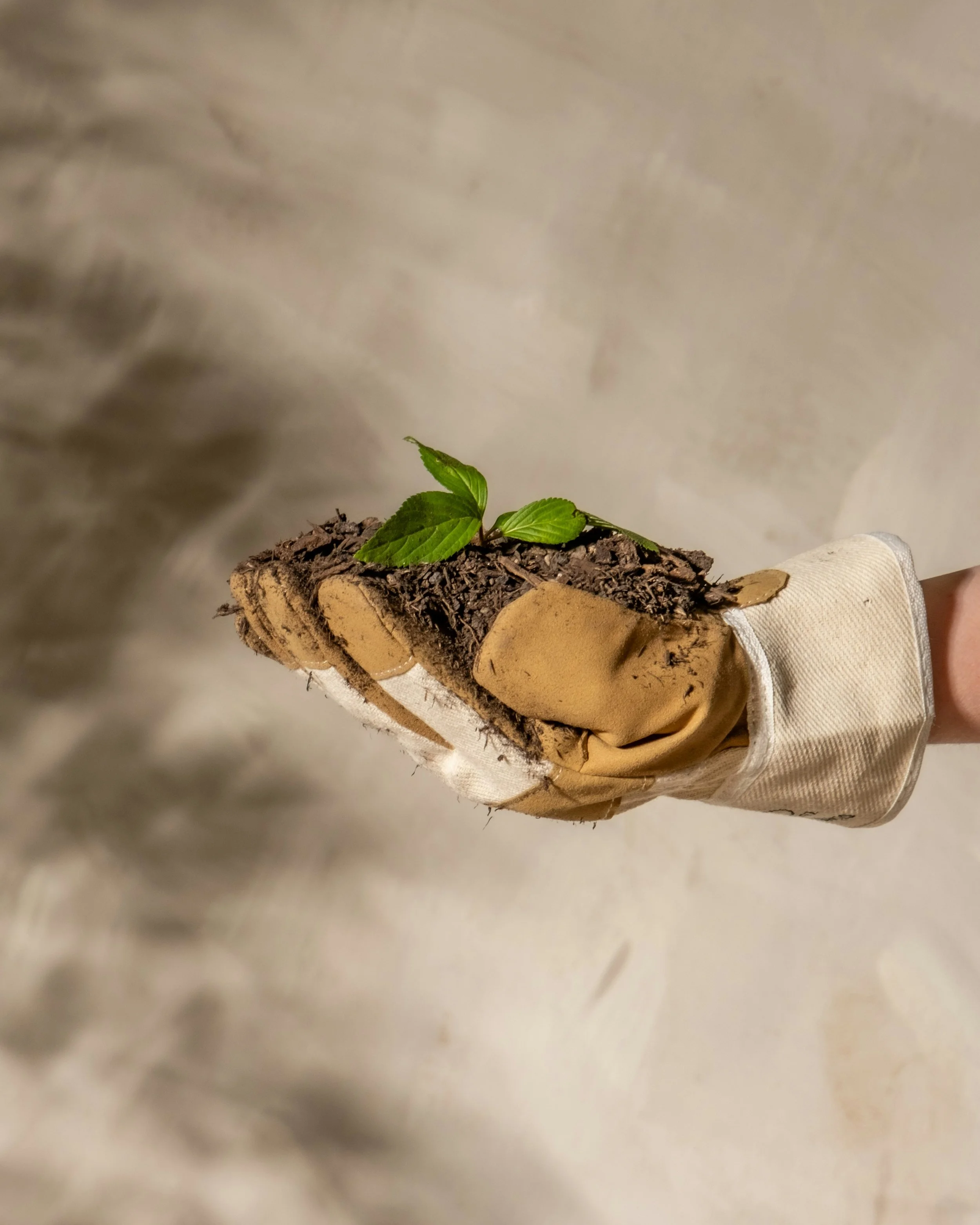
Here's what gives me hope: we can engineer growth-promoting environments at any age.
You Don't Need to Be Perfect
Creating a better garden doesn't mean eliminating all stress or waiting until conditions are ideal.
It means:
Making intentional choices about your environment when possible
Being aware that the more oppressed someone's identities are, the smaller their ability to control their environment: and recognizing that environmental shame is bidirectional (gender, sexuality, religion, ethnicity, nationality and more)
Building skills to stay connected within yourself and regulate even in non-ideal environments
Recognizing that even small improvements matter
You weren't broken. You were planted in concrete. Understanding yourself will ultimately enable you to navigate different environments because you know yourself and understand that, contrary to some common misinterpretations of shame as purely being internal or the product of trauma - not all responses originate within you, some are reactions to genuine environmental toxicity.
And now you know: you can create your garden.
What's Next
Understanding science is transformative but knowing how to apply it is where the real work begins. In my upcoming posts, I'll share the practical findings: specific pitfalls to avoid, what healing actually looks like, how to create enriching environments at any age, breaking intergenerational cycles and understanding co-occurring disorders as one dysregulated system.
This isn't about perfection. It's not about becoming a dandelion. It's about understanding your orchid nature and creating the conditions where you can finally bloom.
The science of epigenetics gave us the "why." Now I want to give you the "how."
To follow my work, follow me on Instagram @discoverywithjosie and LinkedIn.
If this resonated with you, I'd love to hear: Are you an orchid? What environment helped you begin to bloom?
A note to readers: This research could be misused to stigmatize children of people with alcoholism or to promote determinism. That's the opposite of what this science shows. These findings are about understanding risk and resilience - pathology is transmitted and most importantly, knowing that with the right support, outcomes can be transformed.
This isn't about labeling people as damaged. It's about recognizing patterns so we can intervene with compassion and effectiveness.
How to Cite This Post
Mansergh-Johnson, J. (2025, November 27). When stress activates vulnerability: Epigenetics, sensitivity genes, and why orchids need different gardens. [Resilience Therapy Blog]. www.resiliencetherapypllc.com
© 2025 J. Mansergh-Johnson. All rights reserved.
References
Albert, D., Belsky, D. W., Crowley, D. M., Latendresse, S. J., Aliev, F., Riley, B., Sun, C., Conduct Problems Prevention Research Group, Dick, D. M., & Dodge, K. A. (2015). Can genetics predict response to complex behavioral interventions? Evidence from a genetic analysis of the Fast Track randomized control trial. Journal of Policy Analysis and Management, 34(4), 497–518. https://doi.org/10.1002/pam.21811
Bakermans-Kranenburg, M. J., van IJzendoorn, M. H., Pijlman, F. T. A., Mesman, J., & Juffer, F. (2008). Experimental evidence for differential susceptibility: Dopamine D4 receptor polymorphism (DRD4 VNTR) moderates intervention effects on toddlers' externalizing behavior in a randomized controlled trial. Developmental Psychology, 44(1), 293–300.
Boyce, W. T., & Ellis, B. J. (2005). Biological sensitivity to context: I. An evolutionary-developmental theory of the origins and functions of stress reactivity. Development and Psychopathology, 17(2), 271–301. https://doi.org/10.1017/s0954579405050145
Ellis, B. J., Boyce, W. T., Belsky, J., Bakermans-Kranenburg, M. J., & van IJzendoorn, M. H. (2011). Differential susceptibility to the environment: An evolutionary–neurodevelopmental theory. Development and Psychopathology, 23(1), 7–28. https://doi.org/10.1017/S0954579410000611
Finnegan, J. (2010). How to Talk About Children’s Mental Health: A FrameWorks MessageMemo. FrameWorks Institute https://www.frameworksinstitute. org/publication/how-to-talk-about-childrens-mental-health-a-frameworksmessagememo
Goodyer, I. M., Bacon, A., Ban, M., Croudace, T., & Herbert, J. (2012). 5-HTTLPR and early childhood adversities moderate cognitive and emotional processing in adolescence. PLOS One, 7(11), e48482. https://doi.org/10.1371/journal.pone.0048482
Ipsos MORI. (2020). State of the nation: Understanding public attitudes to the early years. The Royal Foundation of The Duke and Duchess of Cambridge. https://royalfoundation.com/wp-content/uploads/2020/11/Ipsos-MORI-SON_report_FINAL_V2.4.pdf
Kegel, C. A. T., Bus, A. G., & van IJzendoorn, M. H. (2011). Differential susceptibility in early literacy instruction through computer games: The role of the dopamine D4 receptor gene (DRD4). Mind, Brain, and Education, 5(2), 71–78. https://doi.org/10.1111/j.1751-228X.2011.01112.x
Lebowitz, M. S., & Ahn, W. (2014). Effects of biological explanations for mental disorders on clinicians' empathy. Proceedings of the National Academy of Sciences, 111(50), 17786–17790.
Raffetti, E., Melas, P.A., Landgren, A.J. et al. DNA methylation of the glucocorticoid receptor gene predicts substance use in adolescence: longitudinal data from over 1000 young individuals. Transl Psychiatry 11, 477 (2021). https://doi.org/10.1038/s41398-021-01601-6
van IJzendoorn, M. H., & Bakermans-Kranenburg, M. J. (2012). Differential susceptibility experiments: Going beyond correlational evidence—Comment on beyond mental health, differential susceptibility articles. Developmental Psychology, 48(3), 769–774. https://doi.org/10.1037/a0027536