When Stress Activates Vulnerability: Epigenetics, Sensitivity Genes, and How to Create Your Own Garden
After a decade of following my curiosity in understanding how addiction and mental health disorders could be prevented and working with children and families, I am excited to be opening my doors to clients in private practice at Resilience Therapy in New York.
Over the coming months, I want to share some of what I've learned with you about the etiology of disorders, how to heal, no matter your age, and how we, as clinicians, can be clinically agile to help individuals achieve their potential through an ‘interpersonal neurobiology’ lens (Siegel, 2012).
Today, I'm introducing you to a concept that I am studying at an increasingly granular level that links the role of trauma and shame with the disease model, and that is epigenetics.
‘It’s not genes or environment. It’s genes AND environment. This is where toxic stress actually changes biology, brain chemistry, and neurocircuitry.’
Moving Beyond "Either/Or"
I remember when the Duchess of Cambridge produced a report with Ipsos Mori in the UK on what the barriers were towards implementation of early interventions and prevention. They wondered why, despite 30 years of evidence confirming that relationships shape babies’ brains, ultimately a large percentage of folks would rather fall back on ‘belief systems’ about child-rearing. One of the studies mentioned was one that stuck with me, ‘when clinicians and caregivers believe mental health disorders are solely genetic and predetermined, research shows there are measurably more negative outcomes in children: lower empathy and less optimism about interventions working’. (Lebowitz & Ahn, 2014) It makes sense, right? If we think our impact doesn’t matter, we might be less intentional about how we show up.
In truth, we are epigenetic, which means the environment influences our genes - and stress, ACEs and the sensitivity gene are currently on my list as number one suspects.
Unfortunately, I predict what is happening is that in the families where these sensitivity genes are present, children are then exposed to the very environmental conditions or ‘cultures’ that would exacerbate those genes.
We can’t control what genes we inherit, but we can control our presence, communication style and behaviors, which can either support or exacerbate what's already there.
The way I think about it is there is a difference between being powerless and having influence.
Now of course there are some sources of stress we can’t get away from - and that is worse for more oppressed identities - which is why it is important to be aware of it through this lens in order to also adapt our approaches as clinicians and think about all of this as on a spectrum and working with what you can control and what is also not for the individual to work on but for us as a community to change.
What Are Epigenetics?
‘Epi’ means ‘above’. Epigenetics literally means ‘above the genes’. Your DNA sequence doesn't change throughout your life. However, which genes get expressed (which ones are active or silent), changes in relation to your environment. Different disorders and diseases also have different strengths of heritability.
Environmental factors add or remove chemical tags (like methyl groups: imagine post-it notes) to your DNA. When a gene gets tagged with methylation, it's typically silenced. When those tags are removed, the gene can become active again.
This is where trauma literally gets under your skin: It's not genes or environment. It's genes and environment.
Think of it as Sensitivity + ACES.
The Stress Gene + ACES at the Forefront of Emerging Research
One of the prominent genes being researched in addiction right now is NR3C1, the Glucocorticoid Receptor Gene: the stress gene, related to the HPA axis, essentially, your stress response system.
It helps regulate cortisol and is critical for the connection between your prefrontal cortex (your brakes, your ability to regulate) and your amygdala (your gas pedal for fear).
Research shows that chronic childhood stress causes hypermethylation of NR3C1. Those chemical post-it notes get stuck all over the gene, changing how it functions, resulting in: a weakened prefrontal cortex that struggles to regulate emotions, a hyperactive amygdala that's overreactive to perceived threats, and a nervous system with no ‘calm’: the GABA system that's supposed to help you calm down, becomes dysfunctional (it’s like a car being parked with the engine running).
Eventually the stress gene essentially turns off its receptors: imagine being sensitive to sound and having a radio blasted in your ear - it is basically drowning in the ongoing alert signal for that ongoing stress - so it turns it off to survive, it shuts down the receptor mechanism.
This is the exact neurobiological signature we see in affect dysregulation, hypervigilance, the inability to calm down. It's the internal state that makes substances feel like a solution. But these neurobiological correlates are also the signature of depression, PTSD, and addiction.
It has the same underlying pattern but manifests in different ways.
The exciting news? If the environment can activate genes, it can also flip the switches back again (even after they’ve been activated) - and the research proves this too.
The Research That Left Me Astounded – and I Think It Will for You Too
Researchers at Duke University tracked 891 high-risk children from kindergarten through age 25 (Albert et al., 2015). They looked at kids with a specific variant of the NR3C1 (stress) gene.
Without intervention: 75% developed serious psychopathology by age 25. Substance abuse. Antisocial personality disorder. Aggression. Depression. Anxiety. These kids had the worst outcomes of anyone in the study.
With intervention: The same kids received a 10-year program focused on family support, social skills training, and emotion regulation. Only 18% developed psychopathology.
A 57-percentage-point reduction!
Here's what made me realize we've been thinking about this all wrong: these kids didn't just ‘do better’, they had the best outcomes in the study. The same gene that made them most vulnerable also made them most responsive to healing.
This has been replicated across multiple studies. Research on the DRD4 7-repeat variant shows children with this gene have the worst literacy outcomes in harsh environments but the best outcomes with positive teaching—responding more than twice as well as children without the variant.
Research into the 5-HTTLPR sensitivity gene (serotonin) shows that the gene alone doesn't predict problems: there was a marked difference between those who experienced ACEs and those who did not (Goodyer et al., 2012). This study suggested that actually the kids who had the gene but did not experience ACEs did not have maladaptive interpretations of ambiguous negative feedback, meaning it is both/and.
These aren't ‘bad genes’ - they're genes that make you more receptive to input from your environment: both positive and negative.
Another way you can think about this is when you put a cell in a petri dish, that cell is changed by its culture. It is neither all due to the cell or due to the culture, but something that happens between them both. We, as humans, are a mass of cells.
Orchids, Tulips and Dandelions
Researchers W. Thomas Boyce and Bruce Ellis coined a metaphor that became popular: Orchids and Dandelions (Boyce & Ellis, 2005).
Dandelion children are relatively robust. They thrive in most environments. They're less affected by adversity, but also less responsive to intervention. They grow almost anywhere.
Orchid children are highly sensitive to their environment. In harsh conditions: neglect, chaos, and trauma (which includes emotional abuse: chronic criticism, interpersonal shame, microaggressions, and cultural/stigma-related stressors), they wither. They have the worst outcomes. But in nurturing conditions: safety, attunement, support, and lower rates of toxic shame or emotional trauma, they don't just survive. They bloom spectacularly.
While researchers estimate about 15-20% of people have high sensitivity, the reality is more nuanced: we all fall on a spectrum of receptivity. Some people are highly receptive (like orchids), some are less so (like dandelions), and many fall somewhere in between. It was later proposed you also get ‘Tulips’ who are mildly sensitive who are around 40-50%. So, actually it is likely we fall on a spectrum of sensitivity or receptivity.
If you struggled intensely as a child, if addiction or mental health challenges hit you harder than it seemed to hit others, if anxiety consumed you or depression felt bottomless or substances provided relief you'd never felt before, you might fall more on the orchid end of the spectrum.
Being an orchid isn't a defect. It's a different operating system that requires support plus gentle start-ups of resilience building (not corrosive loading of toxic stress).
Reframing "Sensitive" to "Receptive to Input"
What the research tells us that is so important is that the orchids did better than any other group when they received interventions (prevention, therapy), and that they didn’t have maladaptive sensitivity unless they also experienced ‘ACEs’.
The word "sensitive" has been weaponized. "Stop being so sensitive." "You're too sensitive." The subtext: something is wrong with you.
But research shows these individuals aren't "sensitive" in a negative way. I suggest in truth, they are more ‘receptive’ to what you give them.

“The word ‘sensitive’ has been weaponized. "Stop being so sensitive." "You're too sensitive." The subtext: something is wrong with you.”
A receptive child absorbs more from their environment: both positive and negative. High-resolution.
As I wrote about in my previous post, "Sober, But Still Struggling? The Missing Piece in Addiction Recovery,” some shame is healthy, but as Claudia Black once said “In addicted family systems, shame is poured on its members.” In a shame-based family, any child would be impacted. But with high receptivity, what an outsider might brush off as ‘not that bad’, with your particular nervous system, psychological and biological makeup (and I suspect a part of this has to do with intergenerational trauma can be inherited and held in our DNA but that is for another post!) was devastating. It’s in part due to the fact that these folks are more receptive, these messages go deeper. I suspect what is happening is that shame compounds instantly as trauma, as there is less of a protective neural mechanism around it.
The manifestation varies: substances, panic, food restriction, shut down, compulsions, dissociation.
The root is the same: a highly receptive nervous system trying to survive an invalidating environment.
And the same receptivity that made them vulnerable also makes them more responsive to healing.
A Word of Caution: This Isn't About Labels or Excuses
Understanding where you fall on the spectrum of sensitivity isn't about acquiring a new identity or using it as an excuse, but it is a framework for understanding patterns. It’s not a diagnosis, limitation, or permission to wait for perfect conditions.
What it does mean:
You might benefit from being more intentional about your environment
Small changes in your surroundings might have bigger effects for you
You have capacity for profound transformation when you find the right support
You need to work both sides: change what you can externally while building internal resilience
The goal isn't to identify as an orchid and stop there. The goal is to understand your needs so you can create conditions for growth.
The research around these sensitivity genes continually shows that the positive belief from a mentor can have profound effects on these folks, no matter someone’s age.
Does Parenting Feel Hard As a Cycle Breaker?
If you're parenting a receptive child and feel like you're working three times as hard, you probably are! Your child may need more co-regulation, more consistency, less shame or punitive methods, more connection, and explicit teaching of emotional skills. This isn't a deficit in your parenting. It's a different operating system.
You're not trying to change their nature. You're creating an environment that supports their specific differences so they can meet their potential, rather than seeing it as a negative.
This is a complex intergenerational dance: children and grandchildren of people with alcohol use disorder are more likely to present with neurodivergent diagnoses or mood disorders than in other families (due to multiple factors) - there are elements that are inherent, and we must acknowledge that they are likely to be different in certain ways before they are born.
However, your effort (going back to what’s inside your locus of control / influence) is epigenetically significant. Supportive interactions, moments of attunement, repairs after ruptures. They change our biology. Changing the environment and breaking the cycle matters even more profoundly if they have inherited any of the sensitivity genes. We also know that healing in your generation or above can also turn the genetic coding off, and your kids' genes can change, too.
In my experience of working clinically and in research, kids don't want (or need) perfect parents. They respond well to having their reality validated and any traumatic experiences externalized. Your willingness to self-reflect, work on yourself: your trauma responses, your communication, your capacity to regulate when your child is dysregulated profoundly affects their developing neurobiology.
NB: If you're carrying guilt about the past, you were also likely an orchid raised in concrete. The truth is, although it’s tempting, we may need to remind ourselves not to judge how we were in survival mode or with the awareness we have today. We have the power to change these dynamics today.
For Receptive Adults: You Were Never ‘Too Sensitive’
“The word ‘sensitive’ has been weaponized. The truth is, you are more receptive to both positive and negative input.”
Your receptiveness to what is around you isn't a deficit. It's a potential advantage. The same neurobiology that made you vulnerable to harm makes you extraordinarily responsive to healing.
The tragedy: Orchids, when met with only internal solutions that look at the self as responsible for everything are most likely to think they're ‘treatment-resistant’ when really, they haven't found the right conditions yet, like a plant wilting from lack of sunlight being diagnosed as ‘broken’ rather than simply placed in the wrong spot.
The hope: When orchids finally find attuned, trauma-informed care, they don't just get better. They flourish beyond what they might have imagined possible.
What This Means for Recovery.
Understanding how relationships affect our development and paths to healing: both/ and: the Soil and the Orchid
Being co-regulated by an emotionally available person (or professional) can help us to heal, no matter our age. Equally important to recognize through the neuroscience of trauma, e.g., emotional abuse is: the way people communicate and behave towards us can also be detrimental to our biology, neurocircuitry (as aforementioned: in the PFC, amygdala, nervous system, etc), especially when chronic. We are social beings who are neuroplastic across the lifespan.
You can heal remarkably as an orchid without changing your soil, but you might reach a ceiling in your recovery or struggle to get better past a point without making all the changes you need to make if you are exposed to ongoing trauma in relationships.
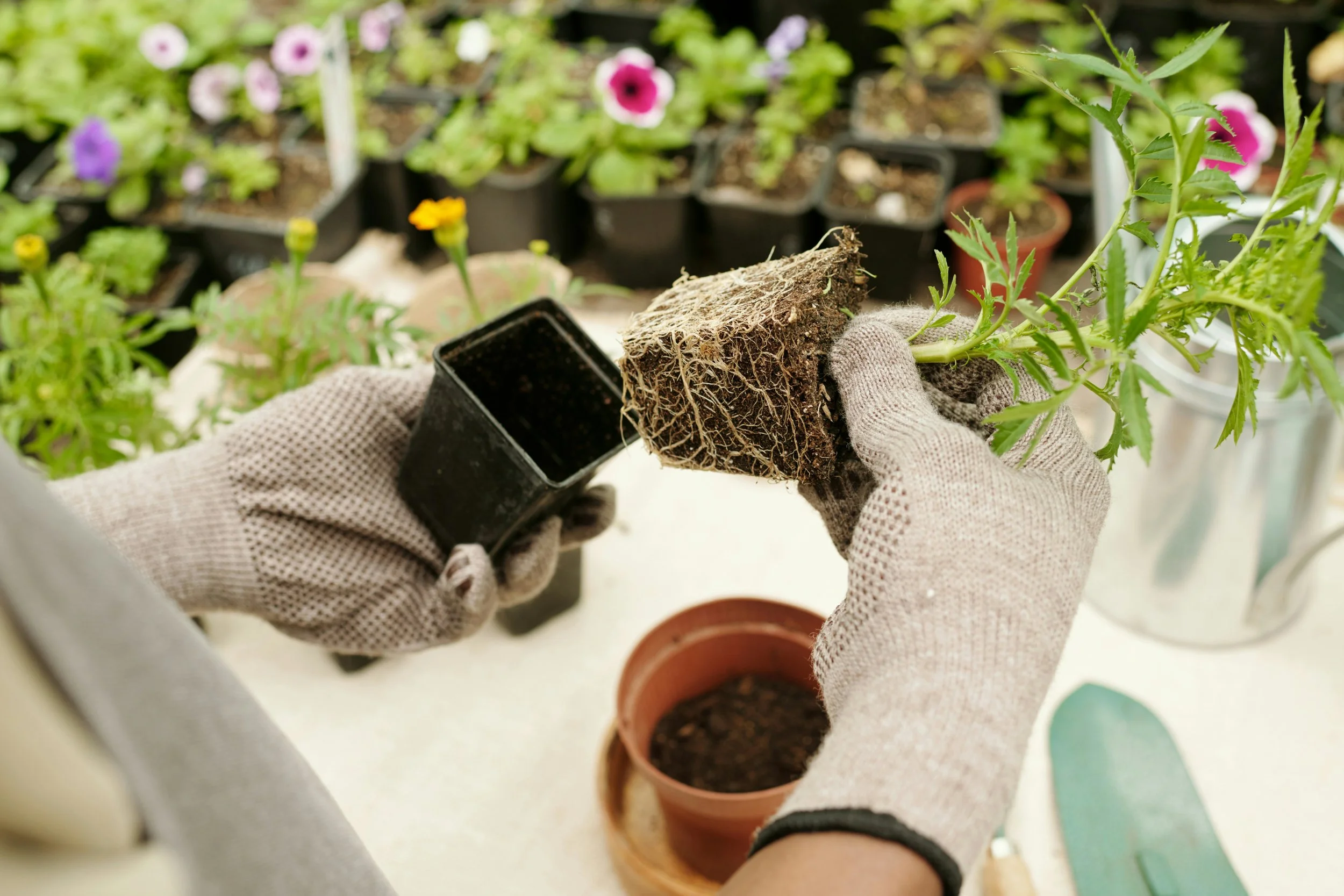
“It’s not your fault you got here, but it is your responsibility to heal. Real healing happens when we work both sides.”
Sadly, a lot of our systems are not informed by the neuroscience of emotion, relationships, and development, and the fact that as human beings, and that others’ behavior can actually impact our neurocircuitry, beliefs about ourselves and the world (no matter our receptiveness or our age). A large barrier is also: major misinformation about what constitutes trauma and the true nature of shame as not purely internal or the result of trauma, but an interpersonal effect (more on that to come later).
There is: managing symptoms (the addiction, anxiety, depression) and healing the roots (the underlying dysregulation from trauma and toxic stress). Supporting the orchid (internal): Building nervous system regulation, processing trauma, strengthening connections, developing skills, sometimes medication.
Then there is:
Addressing the soil (environment): Changing environments when possible, setting boundaries, reducing exposure to external and interpersonal stress where possible, creating safety, reducing ongoing trauma in the ways that are in your capability.
Real healing happens when we work both sides. Not either/or. Both.
Here's the balance: It's not your fault you got here (you didn't choose your genes or childhood), but it is your responsibility to heal (you can choose to heal and engineer parts of your environment now). This is self-compassion for your inner child balanced with responsibility for your choices as an adult.
Your brain remains neuroplastic throughout your entire lifespan. At 25, 45, 65: it's never too late.
Welcome to the Garden
Here's what gives me hope: we can engineer growth-promoting environments at any age.
When you create safety for an orchid child through co-regulation and attunement, you're not just helping them feel better in the moment. You're changing their gene expression. Research shows that effective therapy literally alters methylation patterns at genes like NR3C1, restoring the brain connectivity that trauma disrupted.
When you do your own trauma work as an adult: processing shame, building secure relationships, regulating your nervous system: you're creating epigenetic changes. Your prefrontal cortex can strengthen its connection to your amygdala. Your stress response system can recalibrate.
This isn't a metaphor. This is measurable science.
At 25, 45, 65, the brain remains neuroplastic. Epigenetic patterns can shift. The orchid who withered in concrete can bloom spectacularly in the right soil.
The question isn't "Can I change?" The question is "What environment do I need to create, and what inner work do I need to do?"
How to create a garden

“At 25, 45, 65, the brain remains neuroplastic. The orchid who withered in concrete can bloom spectacularly in the right soil.”
Creating a better garden doesn't mean eliminating all stress or waiting until conditions are ideal.
What you CAN often control:
Building a safe circle of attachment: redefining your close circle to include people who support your healing, creating a 'charging station' to go out into the world from (at least one safe person to co-regulate with, animals count too!) This can start to make a difference vs. not having any safe people, or our closest sources of attachment being ongoing sources of trauma (no respite).
Developing skills to stay connected within yourself, even in non-ideal environments, and make small changes that honor you.
Facing and working on core fear & shame, whether that's in therapy, or if that's not possible due to financial constraints, peer support, healing community resources. Practicing new skills, whether that's emotional honesty, reading books, online healing content, asking for help - synthesizing learning into action.
Making intentional choices about who you let close and how you respond to stress.
What you CAN'T control:
Systemic oppression (racism, misogyny, homophobia, ableism)- and it's important to recognize that the more oppressed someone's identities are, the smaller their 'locus of control' over their environment becomes - that's structural, not personal. Environmental shame and toxic stress is interpersonal, often a reflection or projection of others' disowned and unconscious shame/fear/bias, can be driven by misogyny, racism etc and can respond to our identities (gender, sexuality, religion, ethnicity, nationality, disability status and more)
Other types of projected and disowned fear/shame from unhealed trauma.
Economic constraints and financial instability
Complex familial/spousal relationship dynamics that may be compounded by trauma & financial dynamics (this takes time to unpack, which is a part of the work but it can be done!)
Toxic stress from wider cultural and environmental factors
If you're starting from a harder place, just know that small movements toward your goals, however small they seem now, will compound over time. Healing right now might look like: taking action before knowing where your path is going, accessing peer support, community services, finding moments in nature, establishing one safe person to text when dysregulated, or setting one boundary at a time.
These changes can eventually create greater stability and expand what’s possible for you in the future. It doesn't mean broader inequities will be removed - but it does mean that by internalizing these changes and building a foundation, one day in the future, you might be more able to engage with other sources of help and respite that can help take more of the load off.
The research shows: even minor improvements matter profoundly for orchids. One safe relationship, moments of co-regulation, brief respites from chronic stress, these aren't just nice-to-haves. They change your biology.
For Clinicians:
Work with the whole family system where possible and wouldn’t do harm to the client: communication styles, behaviors, relational patterns. Every person deserves their own healing path (remember it’s both/and internal and relational work helps everyone).
Acknowledge barriers, connect clients to concrete resources, use your power to advocate for change within systems and don’t pathologize their inability to create ideal conditions.
Sometimes the most healing thing we can do is witness the impossibility of someone’s situation and validate that they’re doing remarkably well given the circumstances.
“You will reach a point in your healing where you can sit with any amount of pain with compassion. You don’t live in it anymore.”
The End Result of Doing the Work
Over time you will learn the skills to adapt and be agile across any environment if you have a secure base to launch from + the belief of others, internalized, alongside your own internal pain tolerance, clarity and growth.
You will reach a point in your healing where you can jump in and out of any culture,
Sit with any amount of pain with compassion,
Be in settings where shame is projected at you and know it’s not yours to carry:
See the dysfunction unfolding in front of you whilst remaining consciously connected and rooted in self,
Because you have built a tolerance to these dynamics…
And at the end of the day,
You don’t live in them (anymore).
What's Next
Understanding science is transformative, but knowing how to apply it is where the real work begins. In my upcoming posts, I'll share practical findings: specific pitfalls to avoid, what healing actually looks like, how to create enriching environments at any age, how to break intergenerational cycles, and how to understand co-occurring disorders as a single dysregulated system.
This isn't about perfection. It's not about becoming a dandelion. It's about understanding your orchid nature and creating the conditions where you can finally bloom.
The science of epigenetics gave us the "why." Now I want to give you the "how." To follow my work, follow me on Instagram @discoverywithjosie and LinkedIn.
If this resonated with you, I'd love to hear: Are you an orchid? What environment helped you begin to bloom?
A note to readers: This isn't about labeling people with certain genetic vulnerabilities as damaged, this research demonstrates that certain genes actually have the lowest rates of psychopathology with interventions like prevention programs, therapy, family and social support, and require ACES to actively become maladaptive. It's about recognizing patterns so we can intervene and protect the next gen with compassion and effectiveness.
How to Cite This Post
Mansergh-Johnson, J. (2025, November 27) When stress activates vulnerability: Epigenetics, sensitivity genes, and why orchids need different gardens. [Resilience Therapy Blog]. www.resiliencetherapypllc.com
© 2025 J. Mansergh-Johnson. All rights reserved.
References
Albert, D., Belsky, D. W., Crowley, D. M., Latendresse, S. J., Aliev, F., Riley, B., Sun, C., Conduct Problems Prevention Research Group, Dick, D. M., & Dodge, K. A. (2015). Can genetics predict response to complex behavioral interventions? Evidence from a genetic analysis of the Fast Track randomized control trial. Journal of Policy Analysis and Management, 34(4), 497–518. https://doi.org/10.1002/pam.21811
Bakermans-Kranenburg, M. J., van IJzendoorn, M. H., Pijlman, F. T. A., Mesman, J., & Juffer, F. (2008). Experimental evidence for differential susceptibility: Dopamine D4 receptor polymorphism (DRD4 VNTR) moderates intervention effects on toddlers' externalizing behavior in a randomized controlled trial. Developmental Psychology, 44(1), 293–300.
Boyce, W. T., & Ellis, B. J. (2005). Biological sensitivity to context: I. An evolutionary-developmental theory of the origins and functions of stress reactivity. Development and Psychopathology, 17(2), 271–301. https://doi.org/10.1017/s0954579405050145
Ellis, B. J., Boyce, W. T., Belsky, J., Bakermans-Kranenburg, M. J., & van IJzendoorn, M. H. (2011). Differential susceptibility to the environment: An evolutionary–neurodevelopmental theory. Development and Psychopathology, 23(1), 7–28. https://doi.org/10.1017/S0954579410000611
Goodyer, I. M., Bacon, A., Ban, M., Croudace, T., & Herbert, J. (2012). 5-HTTLPR and early childhood adversities moderate cognitive and emotional processing in adolescence. PLOS One, 7(11), e48482. https://doi.org/10.1371/journal.pone.0048482
Kegel, C. A. T., Bus, A. G., & van IJzendoorn, M. H. (2011). Differential susceptibility in early literacy instruction through computer games: The role of the dopamine D4 receptor gene (DRD4). Mind, Brain, and Education, 5(2), 71–78. https://doi.org/10.1111/j.1751-228X.2011.01112.x
Lebowitz, M. S., & Ahn, W. (2014). Effects of biological explanations for mental disorders on clinicians' empathy. Proceedings of the National Academy of Sciences, 111(50), 17786–17790.
Siegel, D. J. (2012). The developing mind: How relationships and the brain interact to shape who we are (2nd ed.). The Guilford Press.
Van IJzendoorn, M. H., & Bakermans-Kranenburg, M. J. (2012). Differential susceptibility experiments: Going beyond correlational evidence—Comment on beyond mental health, differential susceptibility articles. Developmental Psychology, 48(3), 769–774. https://doi.org/10.1037/a0027536